BANDF AD
Amid memory crunch, PEAKAiO pushes pNFS software to speed older servers
PEAKAiO says banks and other businesses can retrofit three or four year-old PCIe Gen 3 servers with its pNFS-based software and accelerate them to pump out data faster than 400 GBps.
This, it says, sidesteps the need to buy newer SSD-filled servers at a time of sky-high memory prices and lengthening delivery timescales to satisfy their data delivery needs.
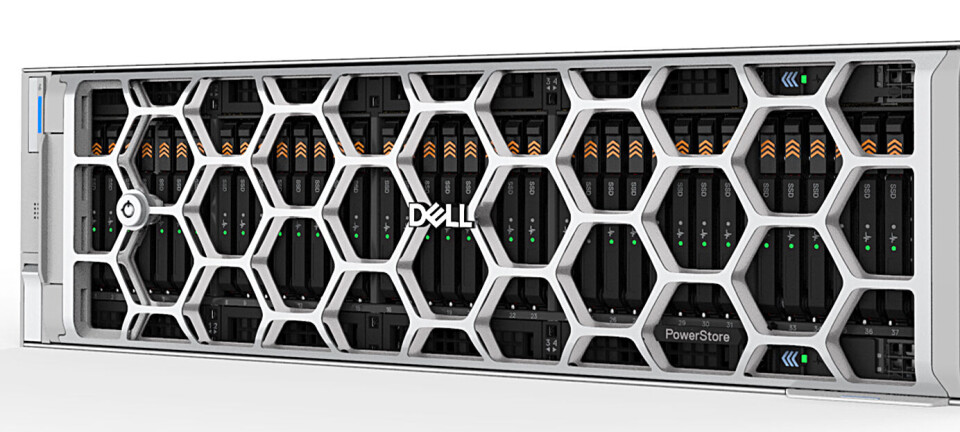
Co-founder and Chief Strategy Officer Mark Klarzynski told us: “Whilst many manufacturers require modern hardware because that's the nature of what you design, we designed a rocket. Put us on a piece of hardware and we make it go rocket fast. And that … also applies if you're using retrospective old hardware. By old, I mean, Dell probably shipped it four years ago. … the idea of not only bringing out solutions, but repurposing what you've already got has really resonated with today's world.”
BANDF AD
”The idea that they can actually hang onto their boxes for another couple of years and be three times faster, four times faster, is a pretty compelling story.”
How much extra performance is he talking about?
CEO Roger Cummings said: ”We took a server at Los Alamos from 70 gigs per second to 400 gigs per second,” and, marketeer Chris Ratcliffe added: “it was getting close to 500 GBps.”
BANDF AD

Marketing and messaging head Chris Ratcliffe talked about meeting banks at Nvidia’s GTC conference: “One of the things that I think shocked all of us was, there's New York banks coming and talking to us about the fact that, well, we used to throw these things [servers] in the skip. Now we're taking them apart and seeing what components we can reuse.
And when you've got the banks doing that, and these were the guys who, back in the day, they were buying Sun E10Ks and E20Ks and all this sort of stuff; when you've got them pulling 2RU servers out of racks and taking them apart and seeing what components they can reuse, that creates a huge opportunity for us because we can sit on that older hardware and give it modern day performance.”
“It turns something, that a couple of years ago these guys would've thrown away or donated, and it turns it into a usable functional AI storage platform.”
He talked about a second market opportunity connected to this, small to mid-scale AI Inferencing: “All the conversations at GTC focus around these massive DGX systems and people buying tens and hundreds of them. And the reality is, while that's super interesting, and that's clearly the frontier of the market, that's not where a whole heck of a lot of customers actually are.
BANDF AD
“Based on what we're seeing, 70, 80 percent of customers don't play in that space. There's a whole chunk of the market where people are looking at less than a hundred GPUs in a farm and doing the real in- lab work, and they don't have the money or the time to buy eight servers and put WEKA on it, or 12 and put VAST Data on it, or five and put Hammerspace on it. They just need some ultrafast storage that they can stand up as quick as possible and start doing their AI work on.
“And I think for us, that's a huge opportunity.”
This made us think about fast data delivery in the AI inferencing area and pose a question:”Would there be a KV cache angle to this?
Mark Klarzynski replied: “There’s Always a KV cache angle. … What I can say is we're working with a large OEM to develop a scaled-out KV cache solution at a lot greater performance than the standard now.”
We followed that thought: “So I could consider an STX type box, a KV cache appliance with this OEM's hardware inside it and your software running inside it, and it goes like greased lightning?”
Klarzynski said: “We're actually going a little bit further and actually bringing KV cache inside the box, inside the DGX, the HGX, and using Peak to actually distribute that globally across a hundred DGXs, HDXs, and be able to use that individually. A bit like a tier server, but very focused on KV cache.”
We suggested: “I guess there'll be some kind of link to back-end storage to keep the GPU servers fed with data?”
Klarzynski again: “It's going to be capable of both KV cache, so temporary data, transient data, as well as persistent data.”
We pushed on: “So this system would have, as it were, an overall environment within which there'd be a KV cache partition or something like that?”
Klarzynski: “Yes, you'll be able to allocate.”
Cummings said UK-based Peak was finding a lot of interest in the US in its software: “We've been successful in Europe and people are recognising that success here in the States. We launched the Peak open pNFS solution and ... we'll close some deals this quarter, the first quarter it's available.”

Peak is building up its US-based team, and has recruited three execs recently:
- Chris Ratcliffe to head up marketing and messaging.
- Rich Pappas as its Business Development VP
- John Harechmak as VP for Field Engineering
Papas is an experienced business developer with ChaosSearch, Datera and Axellio in his CV along with Catalogic, DDN, Storwize and Emulex looking further back. Ratcliffe comes from being VP Products and Solutions Marketing at WEKA, with AMD and Pensando experience before that.

John Harechmak was world-wide VP for Systems Engineering and Professional Services at Hammerspace for three and a half years, coming there from Cohesity.
Klarzynski said: ” John’s got the experience in that world, not just the experience of pNFS, but the experience of where pNFS failed. … before we could create a new pNFS, we had to break the old one. So the last year we've been pushing pNFS until we saw it crack, and until we see it crack, we don't know how to reinvent it. So the beauty of John is he helps us crack pNFS because he's got real life, real customer experience.”
There’s more to come from Peak and the SNIA’s SDC event in September could be a showcase for some of it.