PARTNER CONTENT
The storage refresh that outlives the flash cycle

Partner content: Storage architects who scoped a refresh in 2024 are looking at 2026 budgets that no longer cover the capacity they were supposed to buy. The conventional responses — deferring, cutting scope, or absorbing the overage — each sacrifice the operational plan. A fourth option exists, and it changes the storage architecture conversation for the next five years.
Enterprise SSD list pricing climbed 40 to 50 percent in Q4 2025, with another 33 to 38 percent layered on top in Q1 2026, and NAND contract prices are projected up a further 58 to 63 percent in Q2. Lead times for larger orders have stretched beyond 40 weeks, while Western Digital has already sold out hard drives for all of 2026.
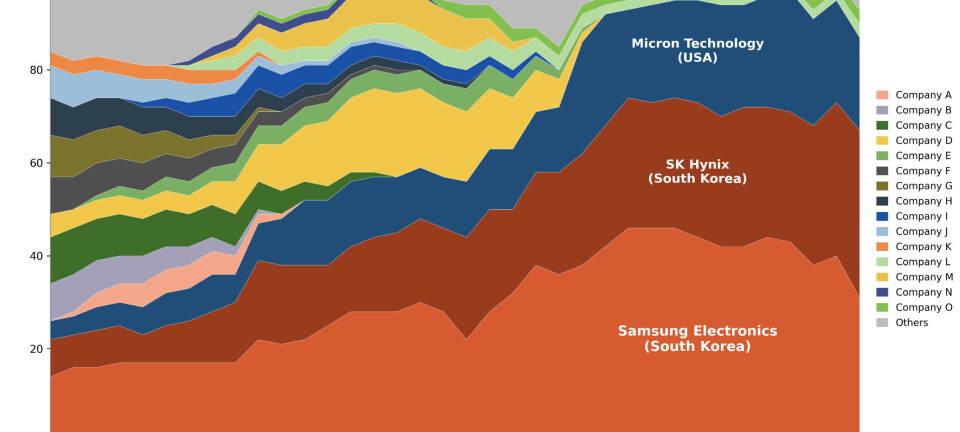
The industry temptation is to treat this as another supply shock that will work itself out, but that reading misses the structural shift underneath: AI-driven high bandwidth memory (HBM) demand has reallocated wafer capacity in a way that holds prices elevated through 2027, with relief unlikely before 2028 or 2029. Storage architects planning a refresh on the assumption that prices will normalize within a year are working from numbers that no longer exist.
Closed storage architectures just became a liability
The dynamic is already visible in vendor pricing. Pure Storage (now Everpure) CEO Charles Giancarlo confirmed it in an open letter on April 23, disclosing a cumulative 70 percent price increase to customers since January on input costs Everpure says have surged between 300 and 900 percent. Most dedicated all-flash arrays are single-sourced by design, with the worst offenders proprietary-sourced, so when component supply inverts that closed sourcing becomes a one-way pricing funnel.
An open architecture treats commodity flash from any vendor as the same logical capacity, so a 30 TB QLC drive from Samsung, a refurbished enterprise SSD from a hyperscaler refresh cycle, and the new flash already sitting in existing servers all become indistinguishable to the storage layer. The buyer shops the open market on every expansion, and the vendor stops functioning as the gatekeeper.
The refurbished enterprise SSD market is the pressure valve
The secondary enterprise SSD market should not be confused with salvage. Hyperscalers, managed service providers (MSPs), and Fortune 500 operators replace drives on rolling lease schedules, long before wear thresholds are met, so drives enter the secondary market with 80 to 95 percent of their rated write life remaining and 7,000 or more terabytes-written endurance ratings intact.
A 3.84 TB enterprise SAS SSD that sells new at $560 on 2026 list pricing lands at roughly $170 refurbished. That's 40-60 percent below the inflated 2026 number, which puts it competitively alongside what the same capacity would have cost new in 2024 or 2025.
The procurement floor is the work, and it is repeatable: R2v3 supplier qualification, NIST 800-88 sanitization certificates, fraud detection against rebadged original equipment manufacturer (OEM) drives, SMART diagnostics on the seven attributes that matter, firmware validation, and stress testing under sustained load. That framework separates a refresh strategy from a coin flip. Our white paper Solve the Storage Crisis with Refurbished Enterprise Drives covers the process in detail.
The architecture has to earn the savings
Refurbished media carries a slightly higher statistical failure probability than new drives, so the savings only matter when operational risk is contained by an architecture that absorbs the elevated failure rate without service impact. That points to synchronous replication rather than RAID, with two or three copies of every block written across separate hosts before the write acknowledges, which removes both parity calculation and rebuild storms.
Active-service capabilities now exist that keep surviving replicas running at full performance during the re-replication window, or when failure exceeds the N+X protection level. The architectural shape that makes refurbished media a non-event is the same one that turns the secondary market into a procurement strategy rather than a workaround.
This is the moment to revisit server-side storage. Hyperconverged infrastructure (HCI) promised commodity hardware and architectural simplicity, then delivered closed scaling rules and resource taxes that pushed buyers back toward dedicated arrays. Ultraconverged infrastructure (UCI) takes the original HCI promise further by unifying virtualization, storage, networking, and data protection in a single code base that runs on commodity x86 servers and consumes whatever flash the open market sells.
Under UCI, the same cluster pools heterogeneous media as one logical capacity tier and tolerates mixed media without performance penalty. That turns a 2026 SAN refresh into a five-to-seven year operational baseline that also enables a VMware exit, rather than a double hit to the IT budget.
The 24-month window
On pricing and availability, Q3 will not be better than Q2. Q4 could be worse, while lead times will not shorten and hyperscaler allocation pressure will not ease. Buyers who defer absorb each successive repricing on a refresh that gets more expensive every quarter.
Any storage refresh should now look for architectures that support off-the-shelf refurbished SSDs from multiple sources. They should treat the procurement framework as the qualification gate, and pair the media strategy with an architecture that survives the failure rate. If your refresh is scheduled within the next 24 months, do it now.
George Crump is CMO at VergeIO and the founder of Storage Switzerland. He has covered enterprise storage and infrastructure as an analyst and practitioner for more than two decades.
Contributed by VergeIO.