BANDF AD
FLASH
Tiny xMEMS chip aims to keep SSDs from losing their cool
xMEMS says that its cooling device can stop SSDs throttling and slowing data access.
Passive cooling of SSDs in compact, sealed systems like ultra-thin laptops and handheld devices can be inefficient. SSDs are positioned near CPUs, GPUs, and other heat-generating components, meaning the thermal environment is already near saturation, leaving little headroom for additional heat dissipation. Heat accumulates over time. Without airflow to carry that heat away, temperatures can rise until throttling occurs.
This can reduce throughput by 20 to 30 percent or more. A drive capable of delivering 2.0 GB/s may drop to 1.5 GB/s under sustained load. For users, this translates into longer file transfers, slower application performance, and increased latency in AI-driven tasks. Some ultra-thin and handheld devices are too space-constrained for conventional fans, so that method of generating airflow to remove heat is not feasible. But there is another way.
BANDF AD
Mike Housholder, VP of marketing at xMEMS Labs, said: "µCooling is the only active solution small enough to live inside the SSD, delivering thermal relief exactly where it's needed to prevent throttling and maintain peak data rates."
Micro-cooling (µCooling), developed by xMEMS, uses piezoMEMS technology to generate airflow through microscopic motion inside a a solid-state active convection chip.
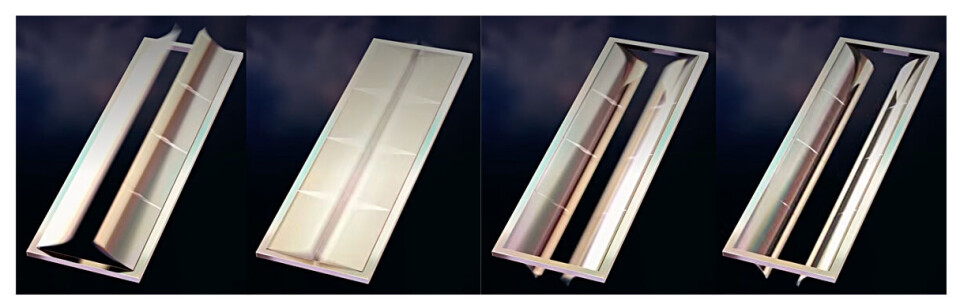
The piezoMEMS (piezoelectric microelectromechanical system) device uses piezoelectricity to generate motion. Microscopic mechanical elements made of piezoelectric materials deform when an electric field is applied. They can also generate an electric charge in response to mechanical stress. Think of the device having holes inside which there are tiny oblong fan-like paddles that curl up when an electric charge is applied and move air through the hole as they curl. The charge is removed, they uncurl, the charge is reapplied and they curl again, moving the air once more.
BANDF AD

Imagine a slab containing such devices operating in series and we can see how they would generate an air current. Lay such a slab over the hot spots of an SSD's chips and it would carry heated air away from the SSD, with cooler air moving into the SSD to replace it.
A 1 mm thick XMC-2400 µCooling chip operates silently, is vibration-free, and can move air at up to 28 cc/s with a 150 mW electricity feed. It's built using a semiconductor process and its dimensions are 7.42 x 9.48 x 1.13 mm. The chip can be top or side-vented.
The Santa Clara-based xMEMS business was founded in 2018 and has built piezoelectric speakers for wireless earbuds as well as cooling chips. It raised $21 million in a Series D funding round in late 2025 and has more than 245 granted patents.
Check out a YouTube video to learn more.
BANDF AD
Bootnote
The word "piezoelectric" is derived from the Greek "piezin," which means to squeeze. Squeezing or pressing such a material generates an electric charge. Conversely, if an electric charge is applied, the material changes shape.