BANDF AD
Dell turns up PowerMax dial to 11
Dell has increased its PowerMax array’s performance, ransomware resilience, and OpenShift's attractiveness as a VMware migration target.
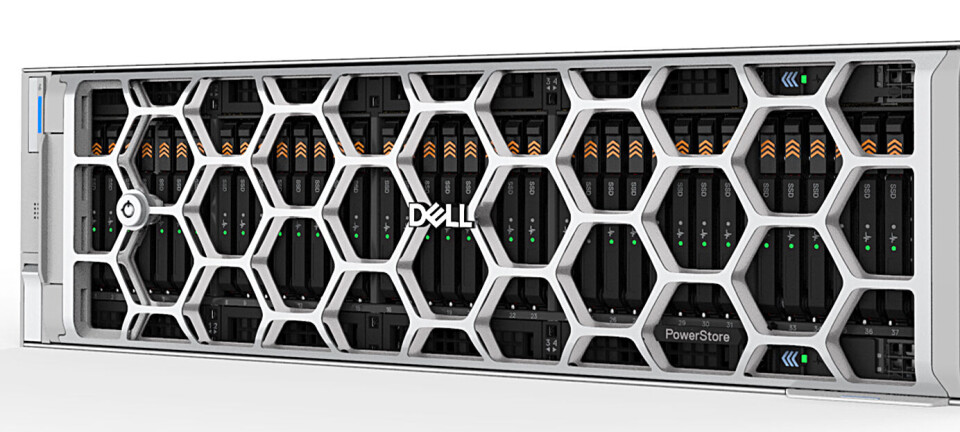
PowerMax is its high-end enterprise block and file storage array competing with roughly similar mission-critical data arrays from IBM (DS8000), Hitachi Vantara (VSP One) and Lenovo (Infinidat’s InfiniBox). These arrays are not in the front row of AI data serving to GPU servers where mid-range, relatively midrange, arrays from DDN, Dell, NetApp, Pure Storage, VAST Data, and WEKA feature strongly. But AI data serving is surely coming for them as well.
The latest v10.4 PowerMax OS, Dell’s Director of Primary Storage and ISG Portfolio Product Marketeer Brian Henderson says: “introduces faster performance, enhanced cyber resilience and deeper ecosystem integration.”
BANDF AD

SRDF (Symmetrix Remote Data Facility) maintains real-time (or near real-time) copies of data on a production storage array at one or more remote storage arrays to aid disaster recovery, high-availability and data migration. Where workloads are protected by SRDF, PowerMax provides up to 25 percent faster read response times.
Dell’s unique 4-site SRDF, dual-region replication offering combines SRDF/Metro for active-active metro replication within a region, SRDF/S as an option for synchronous replication within a region, and SRDF/A for cross-region failover. It ensures availability and data consistency across four sites with automated failover, load balancing, and full-scale recovery.
Henderson says that “PowerMaxOS 10.4 accelerates performance while lowering the total cost of ownership for the new PowerMax 2500 and 8500 arrays … thanks to the newest PowerMax node-pair configuration.”
BANDF AD
V10.4 adds Advanced Ransomware Detection “to identify risks early and protect your business before attacks occur. “ Single Sign-in (SSO) support for Okta, PingFederate and Entra ID improves access management, and “private-key support for SSO OIDC strengthens security.”
The new SW helps with migration from virtual machines to containers and integrates with VMware and Red Hat OpenShift. Customers can migrate VMware virtual machines up to 10 times faster through array-based XCOPY and the Red Hat Migration Toolkit for Virtualization (MTV). Better REST API support enables up to 7 times faster storage cluster provisioning for OpenShift Container Platforms(OCP).
This latest PowerMax OS adds support for Connectrix 128Gb Fibre Channel (FC) switches and directors. A network fabric supporting always-on AES-256 encryption, advanced cryptographic capabilities, and AI-driven autonomy is provided through Connectrix B-Series Gen 8 SANs.
TLC flash drives in PowerMax now get FIPS 140-3 Level 2 certification, aiding PowerMax use in regulated industries with compliance standards.
BANDF AD
The Dell PowerMaxOS 10.4 release is available for shipment today.