BANDF AD
Kioxia debuts fast QLC slablet SSD for PC makers
Kioxia has QLC-ified a TLC SSD – giving it the same speed and capacity, and pitching it as a lower-cost version for PCs.

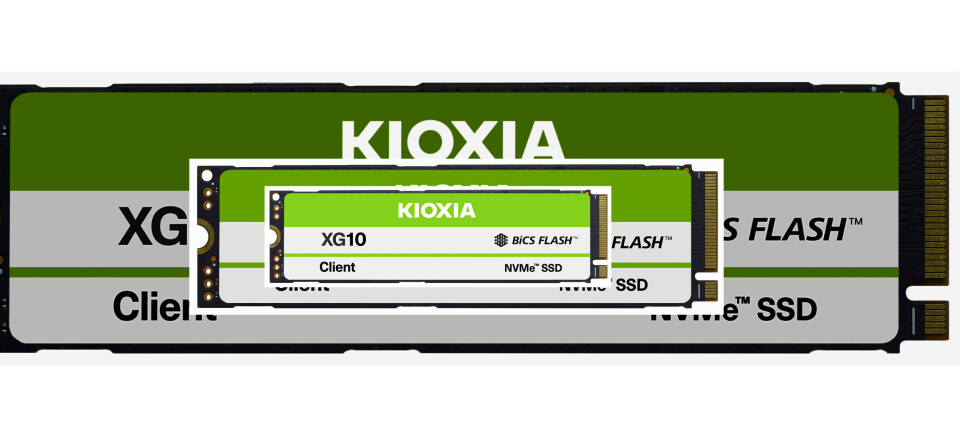
The company’s BG7, a thin, chewing gum stick sized drive, was announced as sample shipping in January. It used 218-layer 3D NAND in TLC (3 bits/cell) format with 256 GB, 512 GB, 1 TB and 2 TB capacities with up to 1 million random read and write IOPS, sequential reads to to 7 GBps and 6 GBps writes . Now the EG7 seems to replace it with near identical capacities and performance, except faster 6.2 GBps sequential write speed, while using QLC 218-layer NAND.
Both the BG7 and EG7 are PCIe gen 4 drives, and come in the M.2 2230, 2242 and 2280 formats. They use a DRAM-less design, relying on a host memory buffer. Essentially the EG7 is a QLC version of the BG7.
BANDF AD

Kioxia America’s SP and GM of its SSD business unit, Neville Ichhaporia, said: “QLC technology continues to expand what’s possible in client storage by delivering compelling value without compromising user experience. With the EG7 Series, we’re enabling PC OEMs to bring high-performance, power-efficient storage to a broader range of systems at a more accessible price point.”
SK Hynix recently announced its PQC21 gumstick drive using QLC-formatted 321-layer 3D NAND and a PCIe gen 4 interface. It’s only available in the M.2230 format, with 1 and 2 TB capacity points, and aimed at AI PCs. Hynix gave it an SLC cache to increase ingest speed on writes. It has not released any actual performance numbers so no direct comparison with the EG7 is possible.
The EG7’s endurance numbers have not been released. Kioxia does say it features SED (Self-Encrypting Drive) support on TGC Opal v2.02, and is currently sampling with select PC OEM customers. General EG7 shipping should start in this quarter.