BANDF AD
EuroStack and the kill switch
Opinion. Four European vendors; Cubbit, SUSE, Elemento Cloud, and StorPool Storage, announced Europe's first EuroStack style sovereign disaster recovery pack to guarantee business continuity in the face of catastrophic external events such as a potential foreign vendor kill-switch. What does this mean?
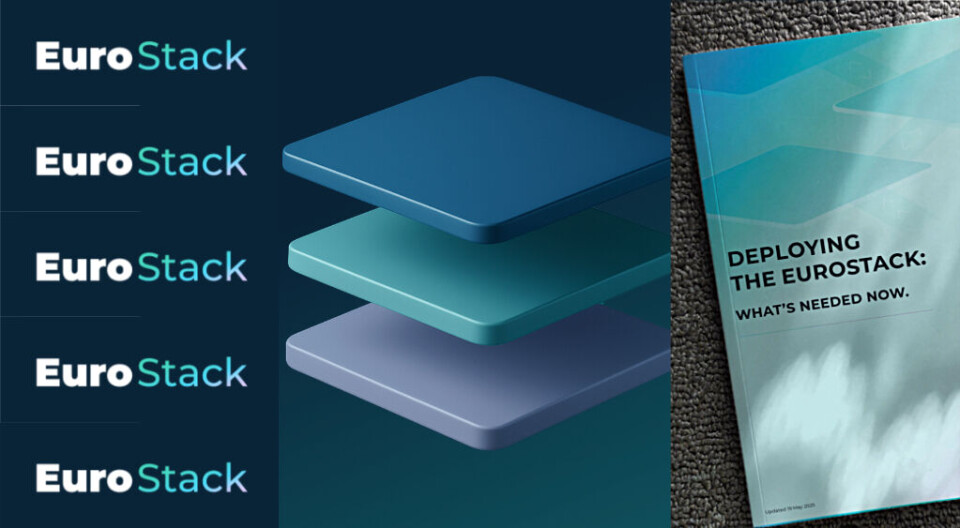
EuroStack is an initiative inside the European Union to lessen its dependence on US digital technology, and to stop it becoming a digital colony of the USA. As a March 2025 open letter to EU president Ursula Von der Leyen stated: “Europe needs to recover the initiative, and become more technologically independent across all layers of its critical digital infrastructure: from logical Infrastructure - applications, platforms, media, AI frameworks and models - to physical Infrastructure - chips, computing, storage and connectivity.”
The EuroStack idea has this as its background: “Europe has come to realise it is almost completely dependent on non-European (overwhelmingly American) actors for its digital technology at all levels of the supply chain, the geopolitical environment has changed dramatically with the new US administration's shift away from supporting Europe in several critical areas.”
BANDF AD
The fear is that the Trump government could simply switch off EU access to its digital technologies by preventing EU resident and business access to its public clouds, other hyperscaler services, Visa-type payment networks and so forth; operating a kill switch.
The Financial Times reports that CB, the French payments organization, wants to resist Visa and Mastercard financial payments dominance to prevent use of their systems being denied to EU businesses and/or residents. The CB system could be an EU-wide payments scheme used instead of Visa and Mastercard.
All in all, EuroStack appears to be a digital fortress intended to provide a kill switch survival strategy.
BANDF AD
There are three broad layers in the EuroStack:
- Hard/physical infrastructure - chips, data centers, connectivity, HPC, quantum technologies, energy infrastructure,
- Soft/logical infrastructure - identity (digital wallet), public cloud, AI Engines, browsers, mobile operating system, and data spaces,
- Intermediation - open transaction networks (OTN), advertising OTN, social media, app stores, communications and productivity services, OTN for energy provision, mobility OTN (cf Uber)

The unreality expressed here is formidable. Consider chips. They comprise compute - ARM, x86, GPU, etc., networking, mobile telephony, DRAM, SRAM, HBM, NAND, HDD heads, drive controllers, bus controllers, and much, much more. Where do the EuroStackers draw the line? Do these EuroStack fantasists envisage a European DRAM company with its own fabs? That will cost many billions of dollars, years of effort, and will likely fail.
Consider the public cloud. European clouds like OVH are so far behind the AWS, Azure and Google giants as to be minnows. The OVH cloud made around $1.2 billion in revenues in its fiscal 2025, which compares with AWS’ $115 billion or more in the same period. It’s more than 100 times bigger.
BANDF AD
The open letter claimed that: “Europe will lose out on digital innovation and productivity growth without sweeping and urgent change – our reliance on non-European technologies will become almost complete in less than three years at current rates,” meaning by May 2028.
But the sweeping and urgent changes they envisage are not intended to create a US style market and business environment. Far from it.
The writers want the EU to create a Sovereign Infrastructure Fund to support public investments, particularly in the capital-intensive parts of the value chain (e.g. quantum and chips) with significant additional commitment of funds allocated and/or underwritten by EIB and national public funding bodies. It should, they say, consider the creation of a “European Dynamism Fund of Funds”.
There were more than 400 organizations listed as signatories to this letter, many found here, and including Cubbit, Kalray, OVHCloud, Scaleway, StorPool, SUSE. It’s not that impressive a list of digital champions, not on a global scale.
Comment
We could say that the only way the EU could bring the EuroStack idea to fruition is by distorting the common market with subsidized investments, mandated buying policies, and regulations. It won’t emerge in a European free market - because there isn't one. There is no common free market for digital goods with a unified language, business growth-supporting tax regime, and laissez-faire regulations. In the EU, bureaucrats, with an anti-US mindset view, rule, and businesses are fettered and semi-strangled. That’s why virtually none, beyond the few like ASML, have emerged to compete with US and Asian-based digital tech giants, and Israeli tech startups, on an equal footing.
All the EU bureaucrats can do is spend other people’s money to pursue their forlorn hope of a second rate EuroStack fantasy - think of the EU’s Ariane space program versus Elon Musk’s SpaceX.
The EuroStack concept is a kind of digital rampart to keep out the US barbarian hordes. In this writer’s view it’s fatuous, incomplete, doomed to failure and, even so, likely to be initiated, despite that, by frantic European bureaucrats, EU administrators, and various organizations wanting yet more EU money flowing into their bank accounts. It's business welfare cash for European digital tech providers unable to be successful globally and wanting a rigged EU market to support them.
The EuroStack concept is a risible charade of digital tech, virtue signalling, dross.