BANDF AD
Kioxia killing off old NAND chippery
Kioxia has issued an EOL (End-of_life) notice for its third generation 3D NAND products, ones with 64 layers.
The EOL document refers to earlier Floating Gate 2D or planar NAND using 15, 24 and 32 nm design rules, and covers SLC (32nm and 1 bit/cell), MLC (24nm and 15nm and 2 bits/cell), and TLC (15nm and 3bits/cell), and 64-layer 3 bits/cell) products. Sales will be discontinued after September 2026.with shipments ceasing at the end of 2028, providing a quite long exit runway, one meeting long-term supply contract periods.

We understand that the background here is the rise in demand for TLC, and QLC, NAND with much higher layer counts, such as Kioxia’s BiCS 6 with 162 layers, and BiCS 8 and 9 with 218 layers. This implies that intermediate generations, such as BiCS 4 with 96 layers and BiCS 5 with 112 layers, are now under threat as well.
BANDF AD
A NAND wafer with 162 to 218 layer chips is worth far more money to Kioxia than the same wafer with planer (single layer) chips or fewer than 100 layer SLC, MLC and TLC chips. By swapping over NAND fab capacity from these older NAND wafer configurations to much denser ones Kioxia’s production facilities will be used more cost-effectively. A single newer wafer can provide millions more NAND bits than an older one, and at a far lower cost-per-bit.
That’s the justification for ending 2D planar NAND and sub-96-layer 3D NAND production.
BANDF AD
Another version of Kioxia’s EOL notice provides the product formats affected:

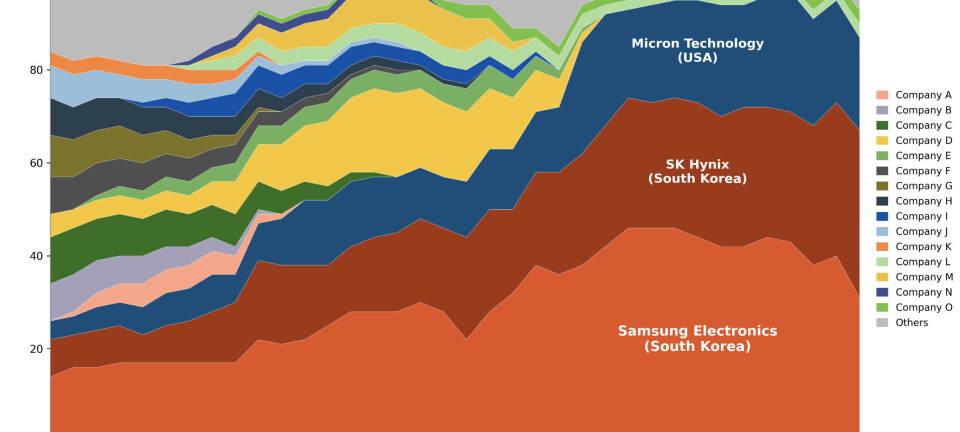
Other NAND suppliers have made the same calculations about using production equipment for making older, far less dense versions of NAND and phased them out already. Neither Micron nor SK Hynix now make planar NAND, and Digitimes reports Samsung ceased 2D NAND production in March, converting the Hwaseong Line 12 to make DRAM instead, DRAM bits being worth far more than NAND bits.
Also Samsung. SK Hynix and Micron, as we understand it, stopped making sub-100 layer 3D NAND some time ago. In effect, Kioxia is late to this party and catching up with its competitors.