BANDF AD

The NAND and disk supply squeeze puts tape back on the agenda for Quantum
How is Quantum progressing with regard to AI, thinking of StorNext as a potential data store, and are hyperscalers looking at its tape libraries? These are the two main questions we want look at.
B&F Talked with Quantum CEO Hugues Meyrath and Chief Product Officer Geoff Barrall to find out. We’ve edited the interview for readability.
Blocks & Files: Are StorNext customers getting involved in AI at all, and will StorNext be managing data for AI workloads?
BANDF AD
Geoff Barrall: No, I don't think the current StorNext will be. It's designed for media applications, and it's great at that, and it does a really good job, and it's got a really great niche.

Hugues Meyrath: StorNext is not in environments where you have AI. So we have customers in the media entertainment space that have huge AI environments where data is stored on ActiveScale cold storage. They're some of our largest StorNext users, but obviously there's certain things that StorNext does and certain things it doesn't do. Likewise, StorNext is also in customers that have genomics or DNA sequencing applications. They also have AI content farms on ActiveScale cold storage. They use StorNext to move data, tier data, and things like that. Because StorNext is big also in terms of it's not just media and entertainment, but it's also moving data around. So you'll find StorNext in a place where you have an AI environment and you need to do the traditional HSM stuff or move data around. You're going to have StorNext in certain hyperscalers who use it to actually move data towards tape. There are all kinds of adjacent use cases.
Blocks & Files: It's a backend store then, to put it a little simplistically, in that it will hold bulk data that could be used for AI workloads. And it's being used for media and entertainment and genomics and so forth. And it's got two tiers. It's got the disk and it's got tape for the cold storage behind it.
BANDF AD
Geoff Barrall: Yes. ActiveScale is, as Hugues mentioned, deployed in many AI situations as the S3 storage for the AI cluster, and it integrates with tape as well through the ActiveScale cold storage product. And so it can offload those joint AI datasets to tape very effectively as well. And for us, that's a very natural point of integration.
Blocks & Files: But at the moment, there's no need you see to add front end, faster data moving facilities to StorNext to pump data up into GPU servers quickly.

Geoff Barrall: Well, you know me. So we are cooking up some things that we're not ready to talk about. So we're not sitting on our hands here, but just the current StorNext as we saw it today is very focused on media and entertainment. It's doing a good job for servicing these. We're still actively developing it, and we continue to exploit those use cases. So I wouldn't say that we're not looking at those workloads, and we definitely are, and we're definitely cooking some things up here, but for the current StorNext product, as our customers would understand it, it's still very focused on media and entertainment, and our efforts on it are focused on media and entertainment as well.
Blocks & Files: Can you say anything about the immediate roadmap for StorNext?
BANDF AD
Geoff Barrall: Well, we’re cooking something newer. … In broad blanket terms, … the interesting thing about Quantum is that it has a lot of different technologies. And I think it's true to say that each one of our technologies is best in class at the thing it's best at. So DXi is definitely the fastest de- duplicating appliance you can buy. I think for live media streaming, StorNext has a proven track history. And for ActiveScale in terms of ActiveScale cold, you have the best in- class density/cost profile for an S3 storage system.
And also I think the ActiveScale S3 stack is second to none in its implementation, even implementing things like the Amazon Glacier protocols. It's really up-to-date, well maintained. So the interesting thing about Quantum is we have, and obviously with our tape library, we've got best-in-class density, it's the most dense … the i7.
So we have lots of interesting technologies. I think what's been the case historically is each one of those technologies has been sort of operated as a different business unit. And one of the things that we're trying to do is we're trying to bring all the pieces together to do something interesting, leveraging all the best-class technologies in a more unified and combined way.
Customers want more and more unified solutions and they want solutions that can deal with [the] data lifecycle. The customer's not really expecting to deal with that these days. And so what we'd like to do is bring all of these pieces together in a very effective way that gives customer a lot of flexibility and manages the data lifecycle for them.
Blocks & Files: That makes an awful lot of sense because you'll be able then to go to existing customers and say, you've got these products from Quantum. Did you know by the way that we could do this, and that would work with that, and ensure this? And you'd give your salespeople lots of opportunities to talk to customers about this stuff.
Geoff Barrall: Yes. And if you believe that tape has part of the data lifecycle, and I think what's been shocking to all of us is how, in the current conditions where disk, suddenly NVMe SSDs become almost unobtainable, tape has suddenly shot back up in interest to everybody. And so I think even very modern companies like Meta and Google and other modern companies are looking at tape now very seriously. And so I think that what's interesting is that Quantum is one of the few companies making tape solutions and also making secondary and primary storage systems. It's all uniquely positioned. There are very few companies that have that, maybe HPE and IBM, but very few others.
Blocks & Files: You go further up the stack as it were than a tape library supplier such as SpectraLogic.
Geoff Barrall: Yes, of course. They're not doing primary storage really.
Blocks & Files: : Does Myriad have any role to play at the moment or is that still on the back burner?
Geoff Barrall: I think there's a lot of interesting technology in Myriad. It is a from-the-ground-up-designed file system that's designed to take advantage of very modern technologies, like PCIe5 and NVMe. It's a complete re-imagining, I suppose, of the file system based on the technologies that have been available for the last few years. And so there's a lot of interesting tech there, and we're definitely planning on leveraging that technology. So we're not planning on sidelining it or putting on the shelf. It's actually under active development, but that's more for part of our future plans.
Blocks & Files: : Could you talk a little bit about hyperscalers and tape libraries and whether Quantum is making progress there?
Hugues Meyrath: Right now we're working with about five of the largest hyperscalers in the world, two in the US and three in Asia. We continue to have a strong partnership with them. The hyperscaler business is not a constant business. You get upgrade cycles, things like that. So you wake up one day, you're going to get a huge PO and then you fulfil those.
We are looking at other hyperscalers. I think everybody's right now in a place where they're running out of power, they're running out of disk, they're running out of flash. Some of the hyperscalers, [when] we had reached out to them a couple months ago, were saying, "Hey, we'll look at tape next year in a couple years." And then suddenly, a few weeks ago, we became more popular when the flash prices and disk prices doubled, tripled. Certainly the phones came back up and I think we're getting more active in a couple of other well-known hyperscalers that don't have tape deployed yet.
it's definitely going to be an interesting area to follow. They're just very aggressive. And I think people that think that AI is a bubble; they're not looking at what hyperscalers are doing. I mean, they're investing in nuclear power, reopening old power plants and buying power companies.
You don't do that unless you have a 10 to 20-year horizon. So that's for me the leading indicator that it's not like a two to three-year cycle. They're just going to put money in [for] a long time. The problems they're going to get more and more complex, and I think it's just both really well for tape and for the industry in general.
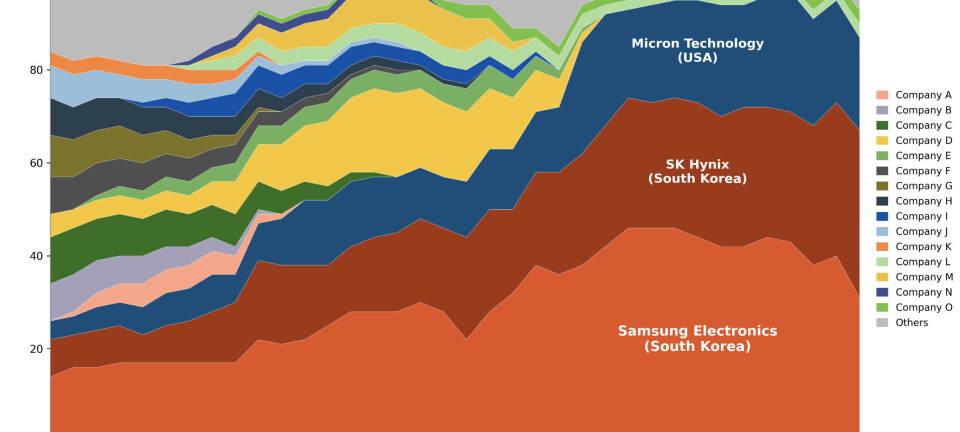
Honestly, the concern in the short run is you don't see wafer fabs coming online to go fulfill flash and disk. But from a tape perspective, we are in agreement between IBM, Quantum, like Spectrologic and BDT and Sony and Fuji, we're going to increase the capacity in the tape industry. And aggressively, as a LTO consortium, prove that tape's an option for customers to move data, and it's power-efficient, it's cost-efficient, and you can tier data that way. And I think it helps mitigate some of the short-term issues, or frankly, even the long-term issues.
Because once you've figured out how to use tape in a tiering scenario, how cost-effective it is, it is just not even funny. And the fact now that … I think people just never caught onto the thing that tape moved from a backup-centric world to an object store world, and the object store world is a different use case, and I think that's giving tape another life.
Blocks & Files: : Would it be fair to say that, in general, the large hyperscalers are realising that their NAND capacity is limited, their disk drive capacity is limited. So to mitigate that, they can move data off NAND and onto disk, which worsens a disk capacity problem, and then they could move data off that onto tape, which helps resolve both problems. And you and your fellow tape library system suppliers are sitting there realising that this is going to happen, and being open to receiving messages from hyperscalers, and indeed talking to them proactively about what they can do to mitigate the media supply properties.
Hugues Meyrath: That's correct. And I think as an industry, we're working right now. I mean, look, the industry is healthier this last few months than it's ever been. So we're on allocation for tape drives. We have a huge backlog. Our backlog keeps growing. IBM is working with the suppliers to increase the manufacturing of tape drives. We're working with the two media manufacturers to increase the capacity of the industry. I think the media industry went from a low of 50 exabyte last year in media to 140 exabyte this year.
And they're on allocation right now, through at least the summer, because the hyperscalers that are using tape are starting to hit them as well. So I think all the signs point to a very, very healthy tape business. Obviously, the use cases, the ability to have object storage, use tape for object storage, not just backup [helps]. And I think people haven't realised that, but it's happening.
That's the core of our messaging to sales. Look, I mean, everybody's disrupted by the high prices of flash and disk and the availability itself, and the availability of server is traumatic to the industry right now, and it's traumatic to the customers. It's dramatic to the channel partners. It hasn't really made its way down a hundred percent to the end users because people were hoarding components, but it's happening in real time.
I think it's going to continue to be traumatic through the summer, at least, in terms of people realising that there's a new world because the hyperscalers have the money. They can take on the debt to go choke the supply, the victims in this place are the enterprise customers and the resellers in the middle, and we're squeezed between them, which is not great. But I think for us, our strategy and sales, they're really doing a great job of saying, "Hey, you can use StorNext to move your data to tape." You have DXi, you can offload the tape, you need an object store, here's ActiveScale cold storage. It's flash, disk and tape. …Because we have that combo of flash, disk and tape, we can just go present more complete options than a normal tape vendor.